
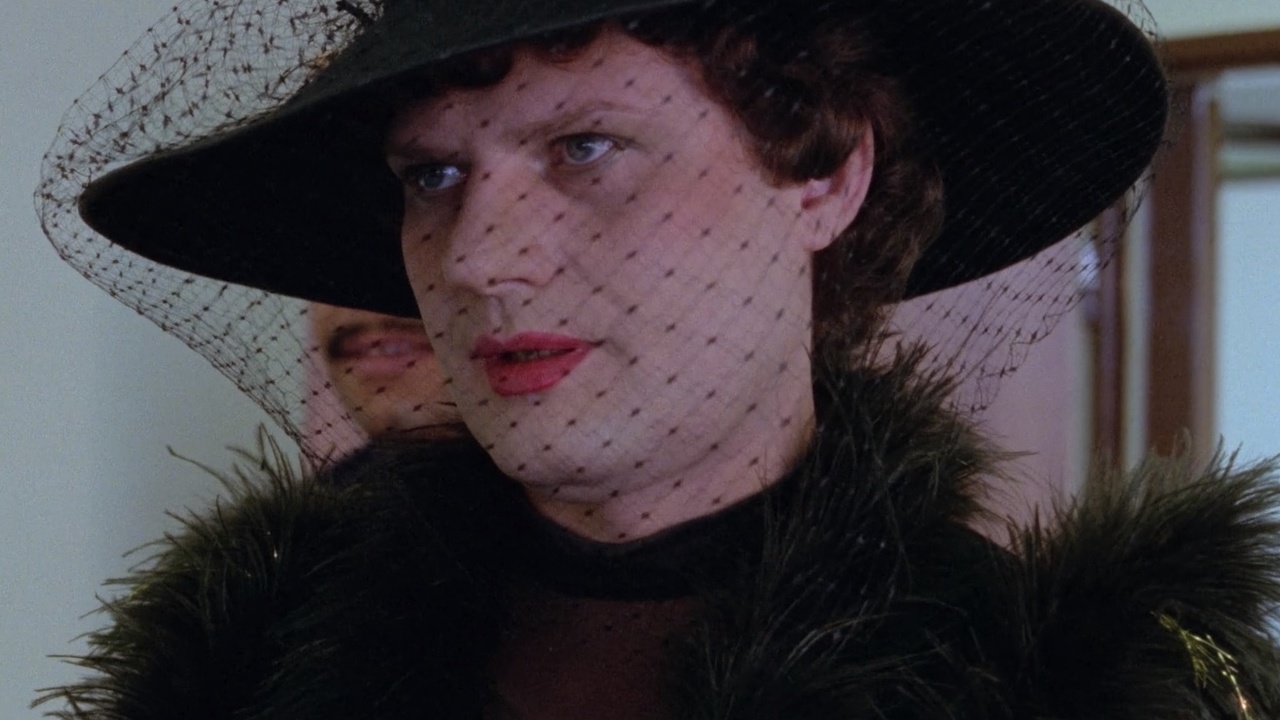
Erwin and Elvira, the butcher
Jörg Markowitsch — 08.11.2021
Fassbinder’s outstanding melodrama „In a Year of 13 Moons“ (1978) is a consistently topical contribution to today’s identity politics debate and a forceful exclamation mark for anti-stereotypical professions.
In my youth at the cinema, Rainer Werner Fassbinder was a must-see. You had to like his films, otherwise you “didn’t understand anything about film”. I found them good, but also exhausting. His first films, “Love is Colder Than Death” or “Katzelmacher” (both 1969) were far too contrived for me. In his final film, “Querelle” (1982), I was even more disappointed by the theatrical staging. After all, Jean Genet was one of my heroes at the time. ” World on a Wire” (1973) and “Berlin Alexanderplatz” (1980) I will never be able to un-anachronistically appreciate the visionary and the genius of these early mini-series.
“In a Year of 13 Moons” (1978), however, it left me, in my mid-twenties, completely paralysed in the cinema, the former Star Kino in Vienna. The film takes on social tensions in a radical way that are still relevant today: Gender identity and discrimination, Catholicism and suicide, bourgeoisie and working class, upper and underworlds, regulated and unregulated everyday life, respectable and less respectable professions, and of course love and violence.
“In a Year of 13 Moons” shows the last days in the life of Elvira or Erwin Weishaupt (my applause still goes to Volker Spengler). The main theme becomes clear already from the opening credits: Elvira is lonely, she is seeking out a ‘John’ in the alleyways of Frankfurt and is beaten up by one and a group of like-minded individuals upon discovering her gender. Dragging herself home (pun unintended), the humiliation, degradation and beatings continue relentlessly, this time on the part of her partner, who was in the process of packing his bags.
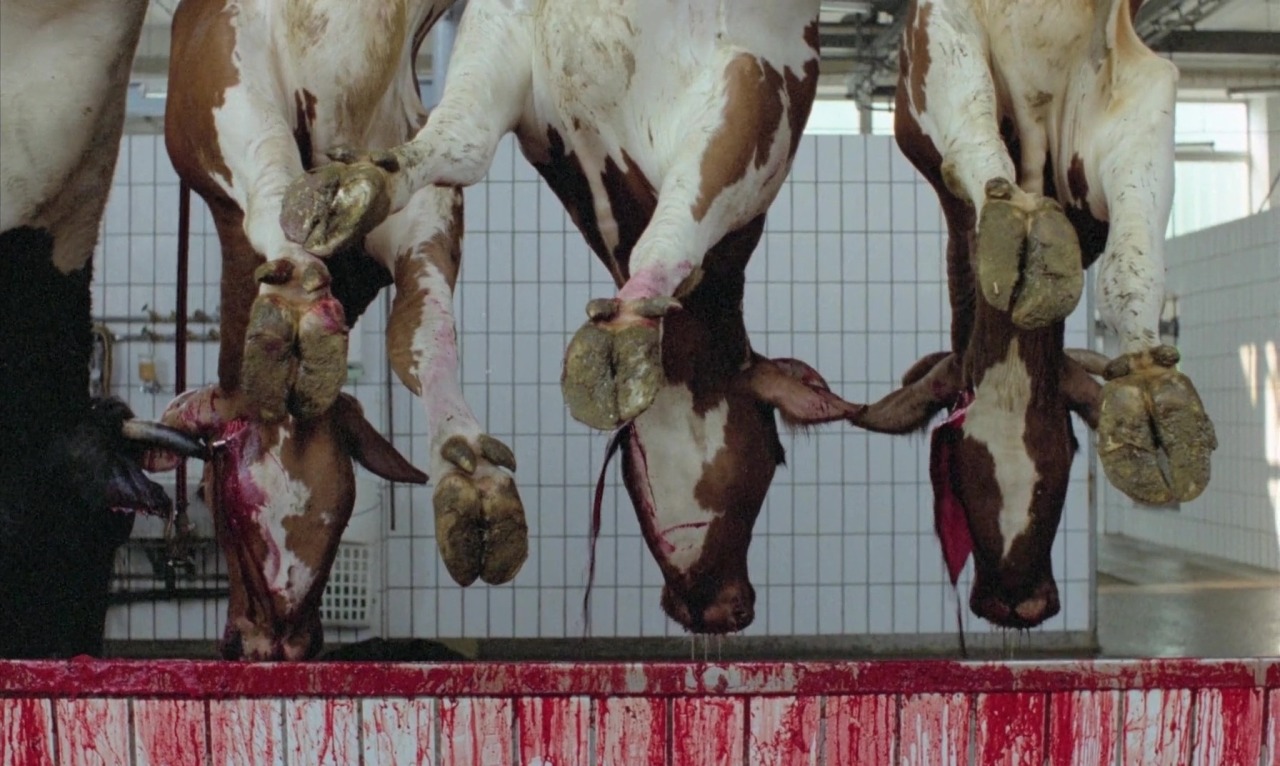
She is finally helped and comforted by Zora (Ingrid Caven), a sex-worker, to whom she tells her life story while receiving first aid: “I was a butcher… that’s what I learned… that’s my profession”. Despite a recent attempt at re-employment in the same profession, where she was met only with contempt, Elvira enthusiastically extols her former occupation. “Come I’ll show you!” she suggests, cut to Elvira and Zora entering a slaughterhouse. How this scene unfolds, the interplay of images, dialogue and music, still ranks high on my list of top film scenes, far above of the one of waking up with a horse’s head in bed. Richard Linklater, also a declared fan of the film, explicitly warns viewers about this scene (see interview).
Precise, almost documentary-like slaughterhouse images are accompanied by music and Elvira’s monologue. While blood gushes from the cows twitching in their death throes, Elvira’s off-screen voice provides a strange mix, once screeching and reciting Goethe’s Torquato Tasso, then calmly telling her story. It goes something like this: Given away by her mother, raised by nuns in an orphanage, would have liked to have learned goldsmithing, couldn’t find an apprenticeship, being a butcher was easier, married the butcher’s daughter, a child, an operation in Casablanca for love of a man who wants nothing to do with love, prostitution, alcohol, and depression.
The scene is a twofold indictment. On the one hand, there is this hypocrisy, the social dissonance of eating meat and the repression of animal slaughter. On the other, the shocking reckoning with the professional stereotype of the crude and brutal butcher. It challenges the fragility of our certainties. We don’t want to believe that this lonely, vulnerable and poetic transsexual was and wants to be again a butcher. And yet it is so.
On Tik Tok there is a channel on which — primarily young people — first pose in their private and leisure lives in order to show themselves on this in their profession or professional clothing. I like to imagine Elvira taking part in this and wonder what setting she would have chosen for it.
PS: After 1978, the year 1992 was one with this particular Fassbinder lunar constellation. 2027 will be another one.
In A Year of 13 Moons, Rainer Werner Fassbinder, 1978, Trailer / German
Richard Linklater on In A Year of 13 Moons by Rainer Werner Fassbinder, 2016
In A Year of 13 Moons, 1978, Filmstill
© Tango Film / Fassbinder
In A Year of 13 Moons, 1978, Filmstill
© Tango Film / Fassbinder
In A Year of 13 Moons, 1978, Filmstill
© Tango Film / Fassbinder
In A Year of 13 Moons, 1978, Filmstill
© Tango Film / Fassbinder
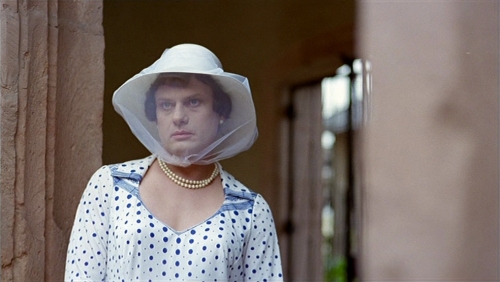
In A Year of 13 Moons, 1978, Filmstill
© Tango Film / Fassbinder
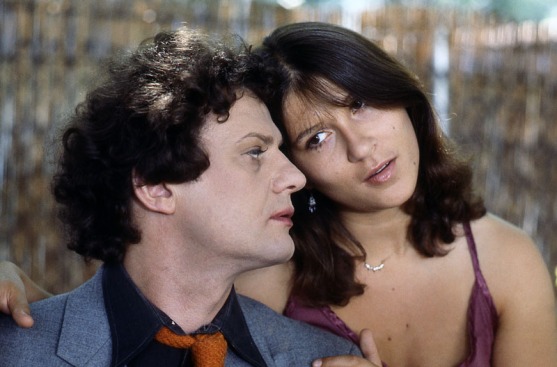
In A Year of 13 Moons, 1978, Filmstill
© Tango Film / Fassbinder
Tags ━━━━━━━━━━━