
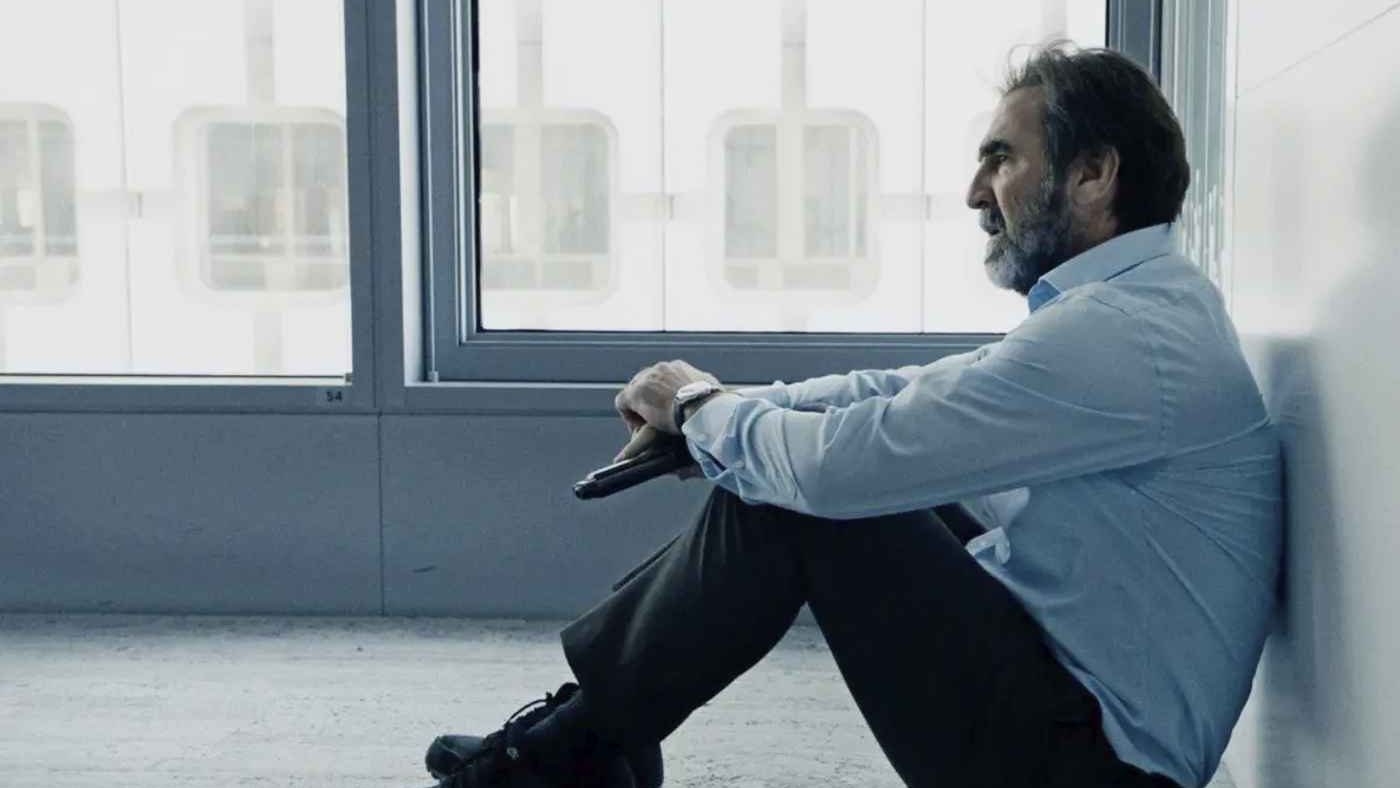
Bossnapping à la Cantona
Reinhold Gaubitsch — 15.04.2023
In the last two decades in particular, disputes between management and workers in France have become increasingly intense. The so-called "bossnapping", the hostage taking of management, masterfully staged by Éric Cantona in the Netflix series ‘Inhuman Resources’ (2020), provides a telling example.
The Netflix series Inhuman Ressources (French: Dérapages, 2020) directed by Ziad Doueiri is based on the 2010 novel Cadre Noir by the successful French crime writer and Prix Goncourt prize winner Pierre Lemaitre, who also adapted the book to the screenplay. The series deals with incidents and upheavals in the world of work in France, which can be considered unique in their frequency and level of harshness, and culminates in the company management being taken hostage. Real-life examples are provided by Caterpillar (Grenoble 2009), Goodyear Tire & Rubber (Amiens 2014) and more recently Renault (Caudan 2021).
France Télécom offers an additional insight into the impact of extreme levels of stress in particular areas of the world of work. France TélécomAn alarming number of suicides were recorded there, 34 in total, between the years 2008 and 2011. For the media it was deemed as a consequence of the canonisation of economic success criteria, the transition to project-based organisation and the self-attribution of failures on the part of the employees.
Against the backdrop of globalisation and the relocation of companies or parts of companies abroad, the French labour market has come under particular pressure. In the years 1995 to 2001, job losses due to outsourcing averaged 13,500 jobs per year. Unemployment increased to 9.6% in 2000 and remained high at 9.1% in 2010, long-term unemployment behaved the same, 42.6% in 2000 and 40.1% respectively in 2010.
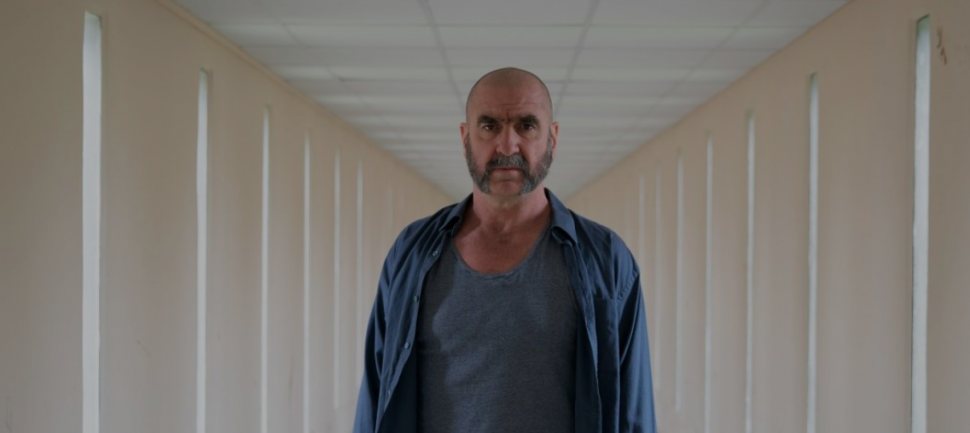
Returning to Inhuman Ressources, Alain Delambre — famously embodied by Éric Cantona — a 57-year-old long-term unemployed former human relations manager who applies for a similar job at a large corporation through a recruitment agency. His habitus seems to fit, yet his age speaks against him, but his advantage is a certain “coarseness” that fits the job profile, as the company is planning a factory closure and numerous layoffs and are looking for a human resources manager to handle it.
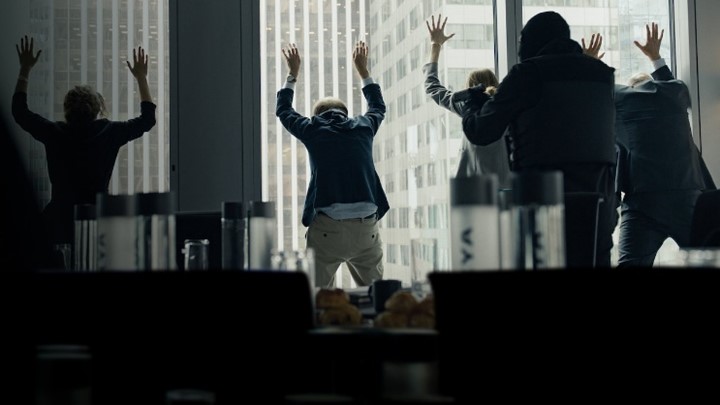
The entrance test is organised as a role play with two aims where leading managers of the company are to be tested also for their stress resistance and loyalty to the company through a hostage-taking scenario. It is the candidate’s responsibility to tell the “fake” hostage-takers how to act via headsets, i.e. to efficiently push the hostages to the limit of their psychological resilience in order to elicit company secrets under exceptional emotional strain. It is through this method, the candidate is supposed to qualify.
This role-play scenario actually took place in a similar way: On 25 Oct. 2005 at the Romainville chateau in Ecquevilly 12 people from the advertising department of France Télévisions are supposedly taking part in “a seminar”. The planning is the responsibility of the general director of the department, whose intention is to test the stress resistance of his closest colleagues. A group of terrorists take the seminar participants hostage and demand a ransom of one million euros and the broadcast of a pre-recorded video on a “France 2” news programme.
As the bossnapping unfolds Delambre, is made aware that the coveted position has long since been promised to his rival, nevertheless keeps up appearances unfazed for the time being and surrenders to the procedure.
However, he pursues his own course and takes all those present as actual hostages. (That he uses this situation to gain access to incriminating documents that will later allow him to blackmail the company is just one of the many twists in the series.) A monologue ensues, where Delambre begins with the words “now the unemployed are in power” and continues in an aggressive manner with his view of the predicament his is currently in. Armed with a pistol, he becomes violent against those he thinks are to blame for his own situation, and the situation in general. Delambre thus transforms the disturbing game into violence. He argues for a balance of possibilities and justifies his actions as self-defence:
‘Our strategy was to adopt theirs. They are terrorising executives. I am doing the same thing. They were all armed. So, I was armed. They were testing reactions in personnel. I was more than ready to test those guys. It is my opinion that Big Business is sort of the old Wild West. To stay alive, have a fire arm. And be able to shoot down someone who want wants to shoot you first.’
The representation of the theme of recruitment in ‘Inhuman Ressources’ is in some ways unparalleled: in the course of the action, Delambre demands to be recruited at gunpoint. Although this is only meant as a gesture, it sets the scene for the reversal of power, a power that is otherwise always reserved for personnel management or top management. Opposing camps collide — where agreement is neither sought nor possible; the violent conflict between capital and labour governs the action. ‘Inhuman Ressources’ — probably not a coincidence for a film like this set in France?
Dr. Reinhold Gaubitsch is a political scientist and was, until his retirement, project manager in the Department of Labor Market and Career Information of the Public Employment Service Austria and responsible, among other things, for vocational guidance films.
Reference:
AFP-Report in: THESTRAITSTIMES vom 28. 4. 2021, „Boss-napping“ returns as angry French workers seize managers
Aubert, Patrick & Patrick Sillard (2005). Délocalisation et réductions d’effectifs dans l’industrie française, L’économie française: comptes et dossiers, Ed. 2005–2006 pp. 57–89
franceinfo (6.5.2019). Suicides à France Télécom: l’article à lire pour tout comprendre de cette affaire emblématiquede la souffrance au travail
Lemaitre, Pierre (2010). Cadre Noir, Calmann-Lévy Noir
OCDE, Taux de chômage de longue durée
Wessbecher, Louise, Huffpost (23.4.2020). „Dérapages“sur Arte: l’histoire vraie d’une (fausse) prise d’otage chez France Télévisions
Dérapages, FR 2020, Regie: Ziad Doueiri, ARTE/Netflix

Dérapages, FR 2020, Filmstill
© ARTE/Netflix
Dérapages, FR 2020, Filmstill
© ARTE/Netflix
Dérapages, FR 2020, Filmstill
© ARTE/Netflix
Tags ━━━━━━━━━━━