
Between enlightenment and ‘plugging’. A history of vocational guidance films on nursing
Jörg Markowitsch — 22.02.2023
Combating nursing shortages through film has a history. A W-o-W film evening explored the changing nature of the nursing profession through vocational guidance films over the last 80 years.
At a film evening on nursing education at the Vienna Film Academy last November, three vocational guidance films from the 1940s, 1980s and 2020s, among others, were jointly scrutinized by nursing professionals, filmmakers and both scholars in film studies and vocational science. Revealing stages of progress and regression as well as fundamental questions concerning vocational training, film and fiction. What does a contemporary nursing education consist of? How much reality is there in vocational guidance films?
Vocational Guidance is a film genre of its own, which in contrast to advertising, has no overt commercial intentions. It does not promote any employer or an educational provider but tries to convey a neutral image of an occupation and enlightens us on the basis of work tasks, qualifications, job requirements, training and social dimensions. In this respect, little has changed in the aim, but pretty much everything has changed in the way it is produced and consumed.
“Faster, shorter, more colorful” is how one could summarize the historic development of vocational guidance films. Axel Stummer’s film “Beruf helfen” (occupation: carer) (AT 1982) was created when it was still customary to last 30min so that there would be enough time for questions from students within the one-hour lesson; presently vocational guidance films have to stand up to competition from three-minute TikTok videos (see, for example, “Gesundheits- und Krankenpflege” (2019) by stay tuned from the Austrian Public Employment Service series of career videos).
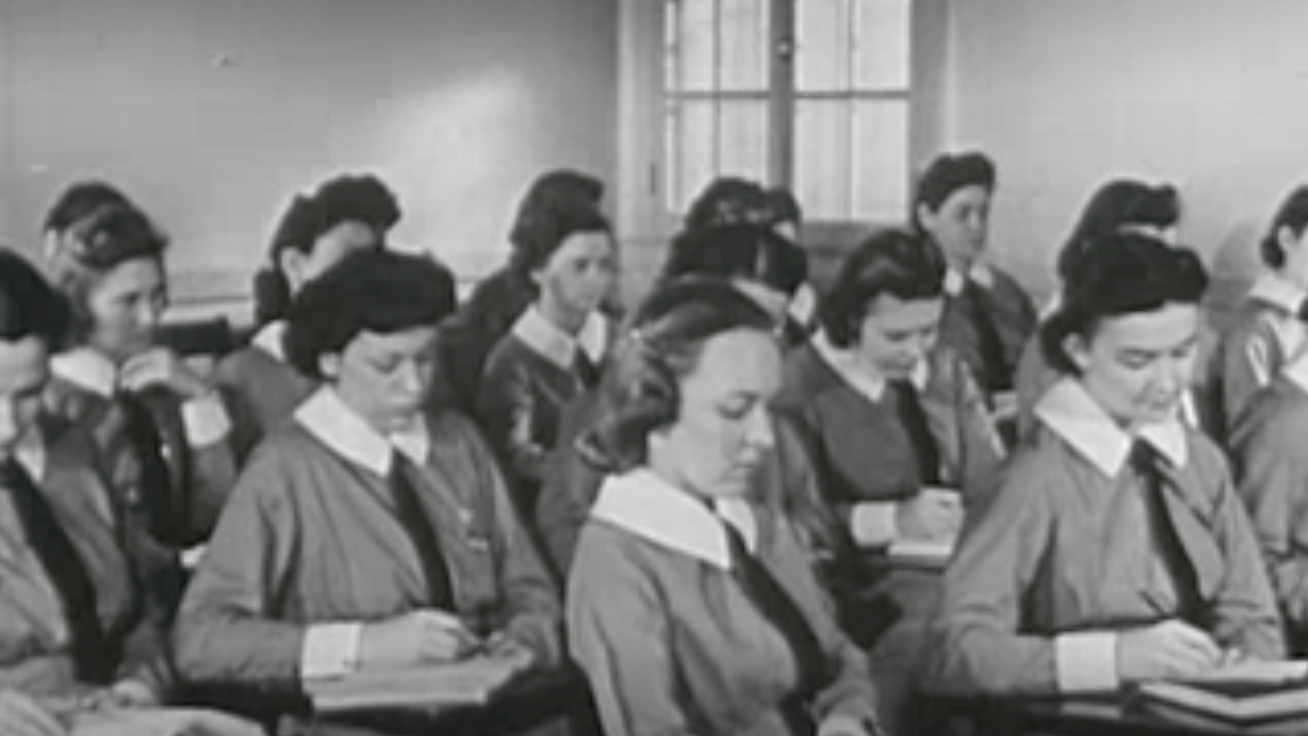
In ‘Nursing’ (USA 1942), the didactic setting from the black-and-white era of film saw an authoritative male narrator with a lecturing voice off-screen explaining the profession. In contrast, today’s vocational guidance films exclusively feature qualified and prospective practitioners speaking for themselves. In ‘Beruf helfen’ from the 1980s, both elements are still used, as well as a mix of actors and active nurses. In addition, according to Stummer, there was a requirement to give the film the quality of a feature film. Consequently, there is also a plot of sorts, and even the leisure time behavior of nursing staff and their residence is given an unbelievable amount of space.
Largely unthinkable today, this aspect thus promoted an important additional finding: we get an insight, into the milieu and social environment of caregivers. As a highlight, director Stummer also built in a few suspense elements à la ‘The Kingdom' (1994)*thus strengthening the feature film character. “Everything was predetermined down to the smallest detail and I wasn’t allowed to change anything in the script, but I took this artistic license,” Stummer remarks mischievously during the film discussion. Stummer was still a student at the Film Academy at the time, and was clearly delighted to see the film again after 40 years.
But how much fiction is there in vocational guidance films, then and now? In current films from the Austrian PES on nursing, for instance, more male nurses than female nurses have their say, surprisingly. The attempt to attract men to the profession is obvious and legitimate, however, the fact that the proportion of men in nursing in Austria is below 20 percent is conspicuously concealed. In this respect, people used to be more accurate: the footage from ‘Nursing’ (1942) shows only women (note: the training was segregated according to gender). Thus, a certain advertising character cannot be denied in today’s vocational guidance films. Today, however, the conscious recruitment of nurses obviously has to plug the career in an even “shorter, faster, more colorful” manner (cf. the 2min campaign film of the Hamburg clinics).
In the past, the idea was invariably: the longer the more convincing. The National Health Service (NHS) in Great Britain recently launched a project on the occasion of its 70th anniversary in which, together with the British Film Institute (BFI), around 100 films on health care zusammengetragen wurden (Spielfilme, Dokumentationen, Animationsfilme, etc.)**. Darunter einer der ehrgeizigsten Rekrutierungsfilme, der je gedreht wurde, mit dem bezeichnenden Titel „Life in Her Hands” aus dem Jahr 1951. Ein einstündiges (!) vom britischen Arbeitsministerium gefördertes B‑Movie, mit dem Ziel Frauen für den Pflegeberuf zu gewinnen. Der Erfolg des Films wurde an den Rekrutierungszahlen gemessen. Die Anzahl der Anmeldungen nach den Aufführungen, die meist in Stadtsälen stattfanden, wurde penibel dokumentiert. Angeblich stieg der Anteil neuer Pflegerinnen innerhalb von fünf Jahren um 27% .
In welcher Form Film heute Wirkung für die Rekrutierung von Pflegekräften entfaltet, bleibt weitgehend eine offene Frage. Die Krankenhausserien Grey’s Anatomy and Emergency Room zählen, laut einer aktuellen US-Markforschungserhebung, angeblich zu den fünf Serien mit dem nachweislich größten Einfluss auf die Berufswahl. Das Problem dabei: ein überwiegender Teil der Befragten sieht ihren Beruf falsch dargestellt und in Wirklichkeit viel anspruchsvoller.
Inwieweit der öffentlich finanzierten Spielfilm „Life in Her Hands” die Wirklichkeit genauer trifft, müssten Historiker:innen beurteilen. Was dahingehend Dokumentarfilm zu leisten im Stande ist lesen Sie in unserem nächsten Beitrag.
Reference:
Allan, H., & Evans, K. (2021). Theorising in everyday nursing practice: a critical analysis. Sage.
Hallam, J. (2012). Nursing the image: media, culture and professional identity. Routledge.
Zenbusiness (2020). Influence of Media on Careers. Blogbeitrag.
Russell, (2018) The NHS on film,
Blogbeitrag. https://www.bfi.org.uk/features/nhs-national-health-service-film
* Hospital der Geister ist eine legendäre Miniserie des Regisseurs Lars von Trier für das dänische Fernsehen, die fast ausschließlich in einem Kopenhagener Krankenhauses spielt, in dem sich das Personal mit übernatürlichen Phänomenen konfrontiert sieht.
** Ein Projekt von dem sich andere Länder etwas abschauen können. Für das kommende Jahr und zum 75. Gründungsjubiläum geht der NHS noch einen Schritt weiter, er schreibt eine Förderung von drei Kurzfilmen, die sich mit dem NHS beschäftigen, aus.
Das ist Pflege, DE 2019, 2min, Kliniken Hamburg,Ausgezeichnet mizt dem deutschen Wirtschaftsfilmpreis 2020.
Nursing, USA 1942, 11min, aus der Reihe „Your Life Work” von Vocational Guidance Film, Inc.
Diplom. Gesundheits- und Krankenpflege, AT 2019, 14min, ein Berufsinformationsfilm von stay tuned im Auftrag von AMS und WIFI
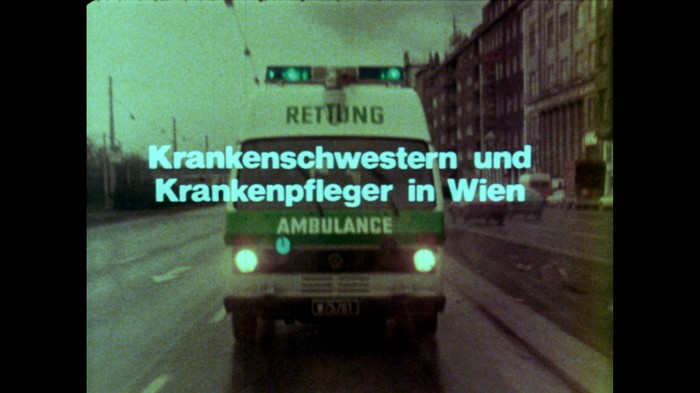
Beruf helfen: Krankenschwestern und Krankenpfleger in Wien, AT 1982, 25 min, Regie: Axel Stummer
© Ausschnitte zu sehen im Filmarchiv der media wien: https://mediawien-film.at/film/441/
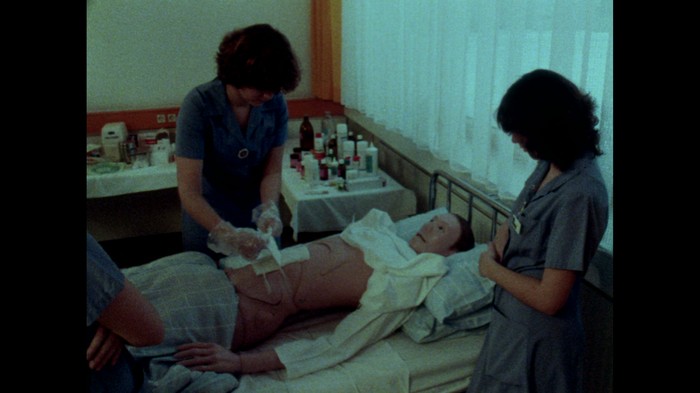
Beruf helfen: Krankenschwestern und Krankenpfleger in Wien, AT 1982, Filmstill
© media wien
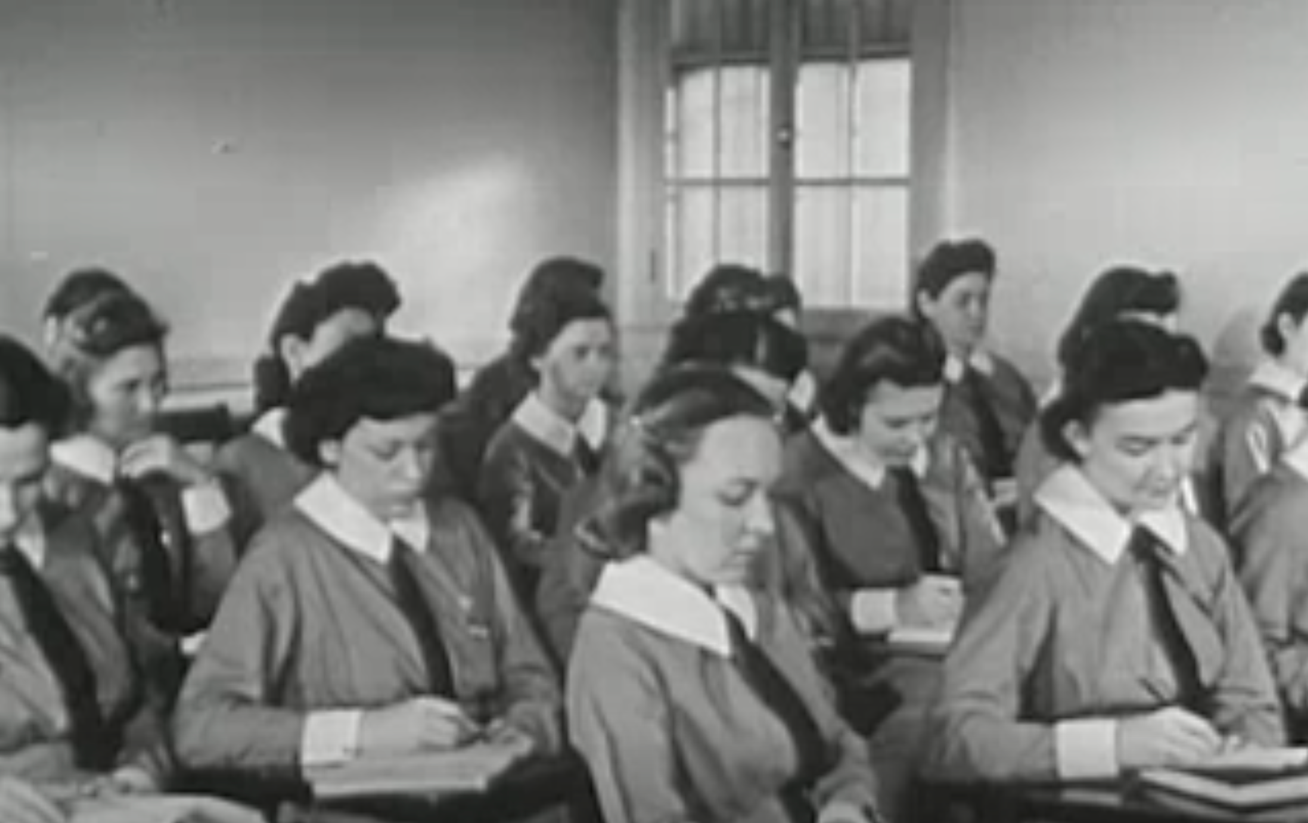
Nursing, USA 1942, Filmstill
© Vocational Guidance Film, Inc.
Tags ━━━━━━━━━━━