
Society without connection
Jörg Markowitsch — 27.11.2020
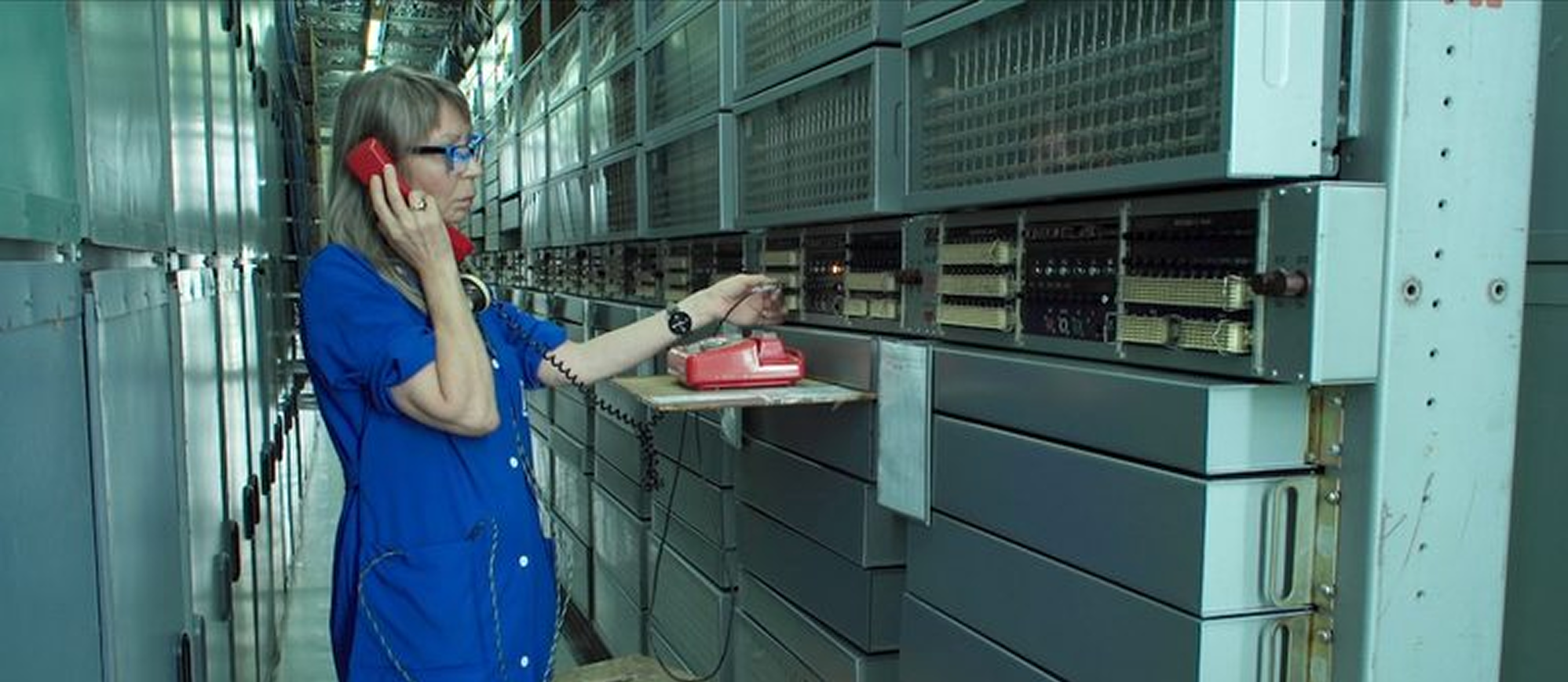
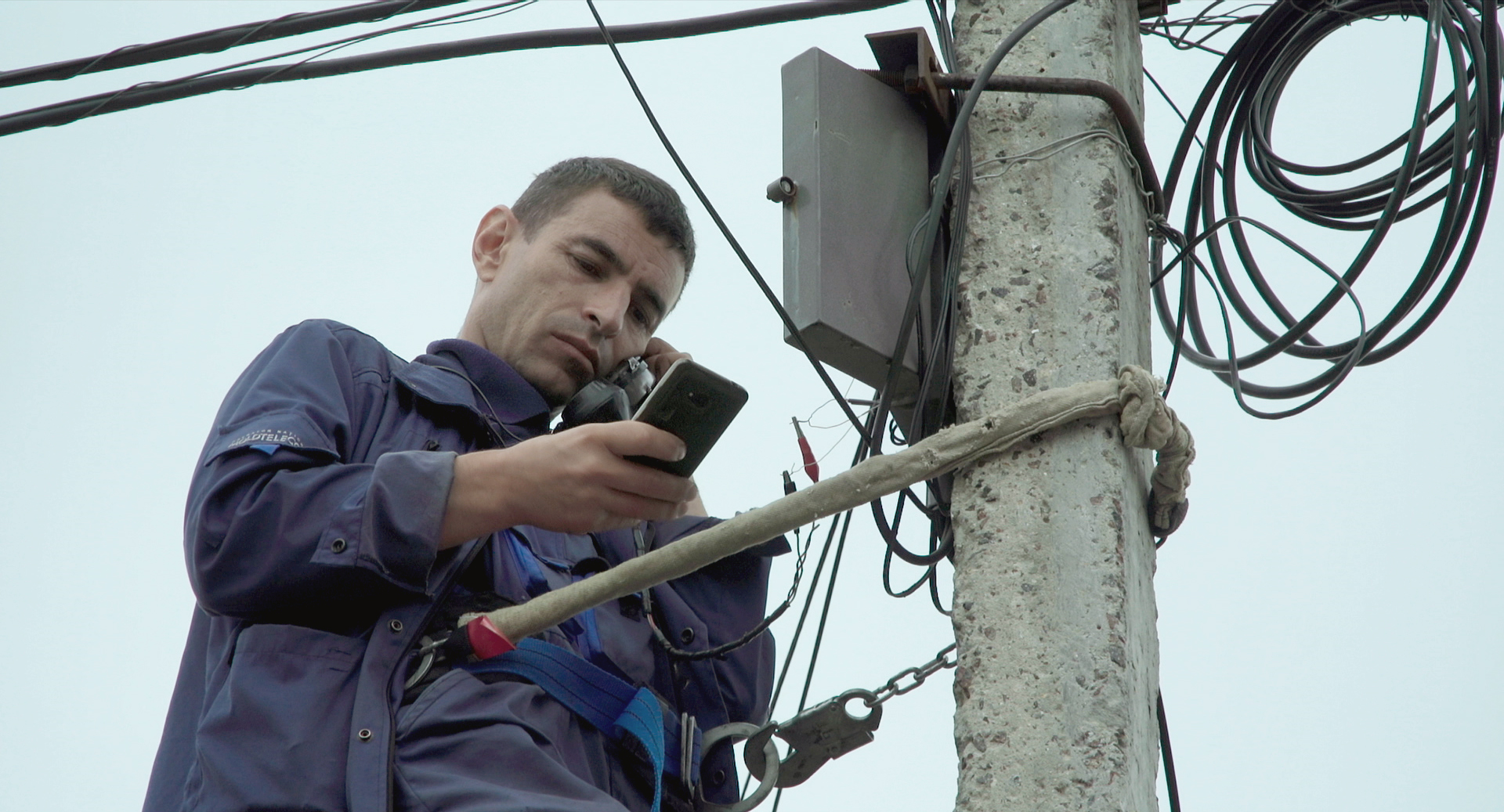
The new film "Please hold the line" (2020) by Pavel Cuzuioc loosely follows the work of service technicians in the telecommunications industry in the far east of Europe while actually portraying their customers more. Those who are in danger of losing their connection to society.
In the third and final installment of his documentary trilogy about unusual professions, which he began around ten years ago, Pavel Cuzuioc, the filmmaker who lives in Vienna and was born in Moldova, once again takes us to his region of origin. While the debut film focused on gravediggers, and the last film on cloakroom attendants (see also the article... The unsung sing) In the current film, the focus is now on field service technicians working for telecommunications providers in Romania, Bulgaria, Moldova, and Ukraine.
Der bei der Viennale 2020 am Vorabend des zweiten Lockdowns gezeigte Film löst bei meiner Begleitung Unbehagen und bei mir verhaltenes Staunen aus. Die ärmlichen Wohnverhältnisse im ruralen Osten Europas, in die die Außenmitarbeiter vordringen, will mein Freund nicht auch noch riechen müssen. Mich verwundert, dass der Übergang ins Mobilfunkzeitalter dort teils noch im Gange ist.
The basic setup is similar to that of the previous film, Secondo Me: one profession, one subject, several countries. One hundred hours of footage, reviewed and edited into an 86-minute sociological-ethnological film essay. And yet the new film is entirely different. While Secondo Me focuses on comparing the lives and biographies of three cloakroom attendants at three opera houses, Bitte Warten blends together the different working lives and filming locations. New technology and increasing globalization are no different in Romania, Bulgaria, Moldova, and Ukraine, and the telecommunications customers are largely alike as well. They seem to be losing touch with the networked society—or consciously rejecting it. Television and a landline telephone, just like in the old days, are nevertheless essential, preferably along with the old programs as well.
Unlike in the preceding films, it is evidently not so much the everyday working and private lives of the service technicians that interest Cuziuoc in the current film, but rather the stories and accounts of the customers. Along the way, the film offers some wonderful miniature portraits. For example, there is a priest who philosophizes about communication, a father mourning the death of his son from a drug overdose, and a pensioner who convincingly presents Kropotkin-style anarchism as a solution to current social developments.
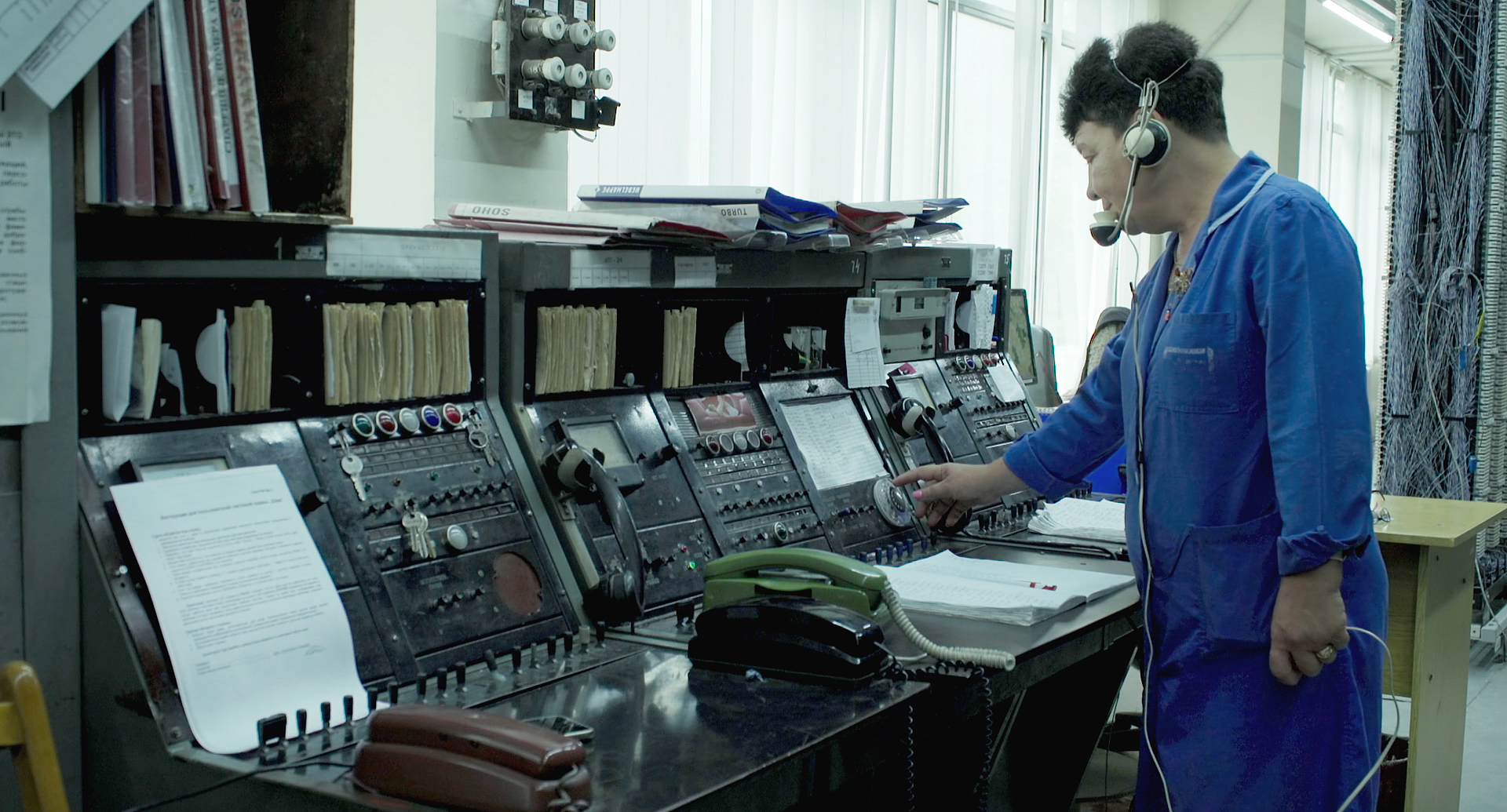
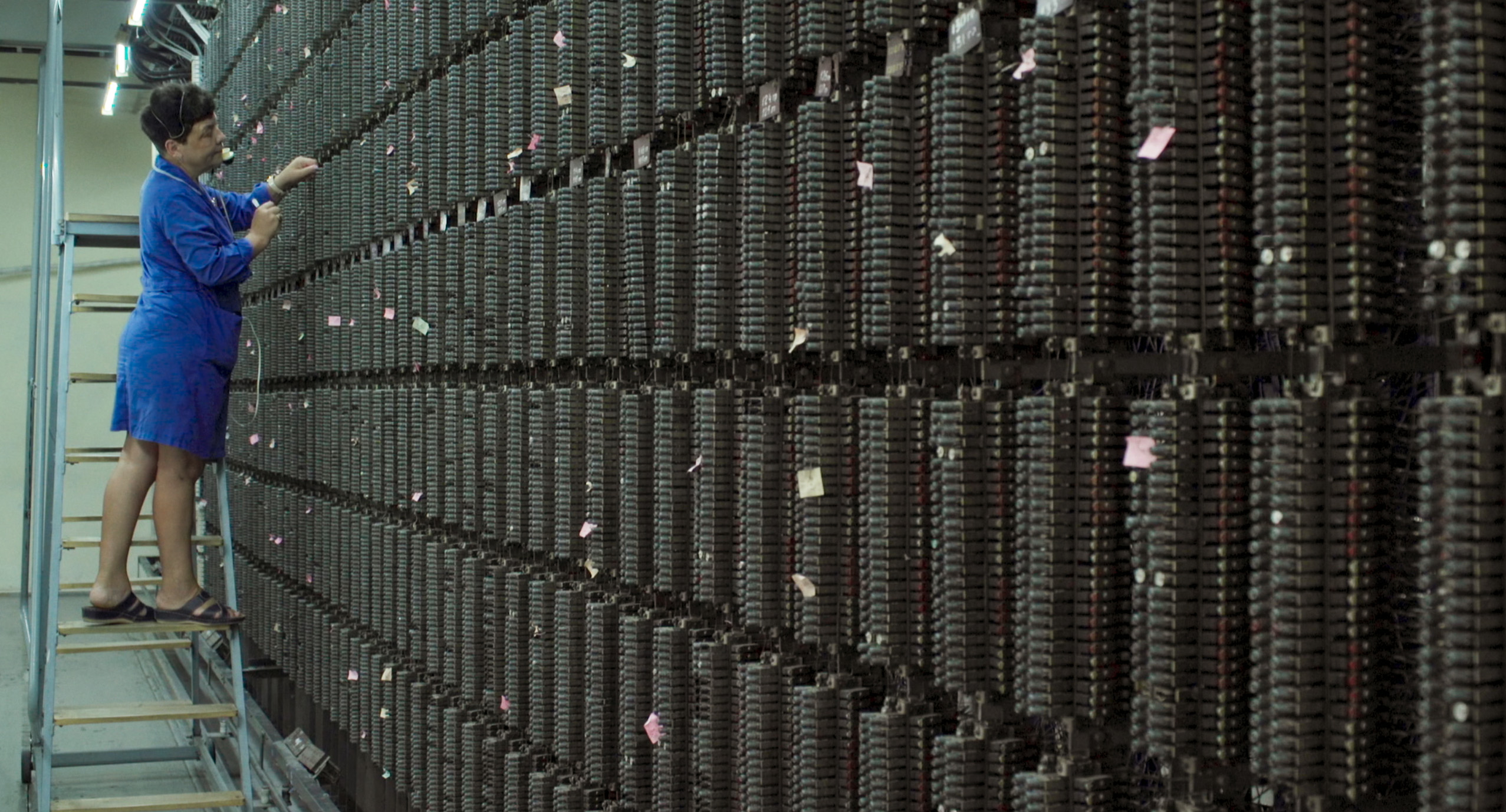
Yet one cannot help but wonder what this contributes to the film and to the idea of a trilogy about unusual professions. From the perspective of occupational studies, it would certainly have been more interesting to learn more about the field service technicians. Even more fascinating would have been to compare this apparently exclusively male domain with the strictly female world of the technical office staff of telephone administrations, shown only at the beginning of the film and now largely extinct. The film, which was scheduled to be released in cinemas in March 2021, is well worth seeing, just like the other two films in the trilogy.
Tags: Telecommunications, communication, service technicians, field service employees, Romania, Moldova, Ukraine, Bulgaria, trilogy, Pavel Cuzuioc, Secondo Me.
BITTE WARTEN, Trailer, 2020, Österreich, 86 min
Arbeit in der Telefonzentrale, London, 1960, 1960, Huntley Film Archive
Telefonzentrale, London, 1930
Bitte Warten, Still
© Pavel Cuzuioc, Filmgarten
Bitte Warten, 2020, Still
© Pavel Cuzuioc, Filmgarten
Bitte Warten, 2020, Still
© Pavel Cuzuioc, Filmgarten
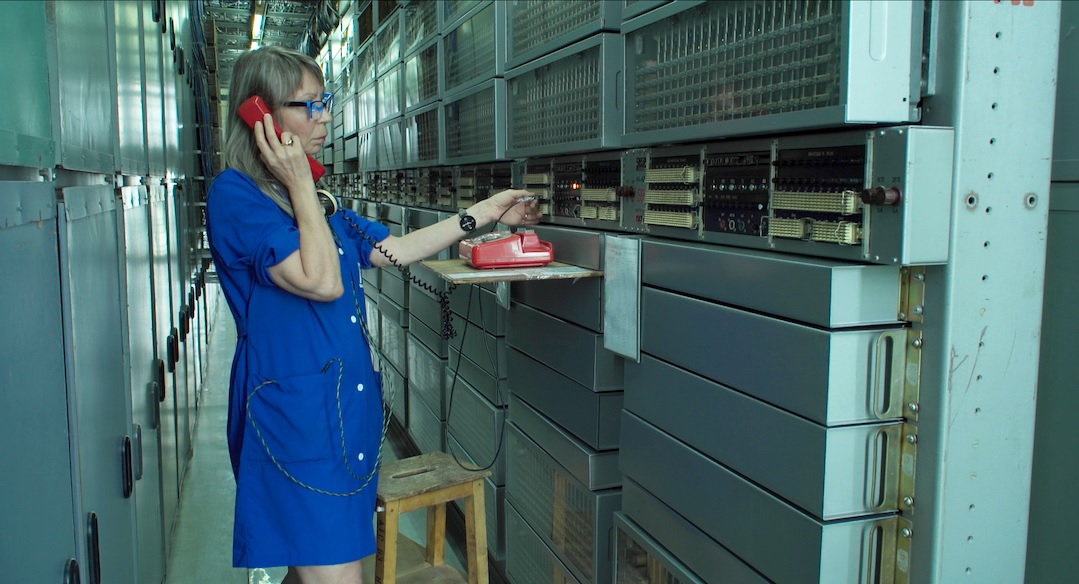
Bitte Warten, 2020, Still
© Pavel Cuzuioc, Filmgarten
Tags ━━━━━━━━━━━